
Protecting Welsh fisheries in the face of climate change

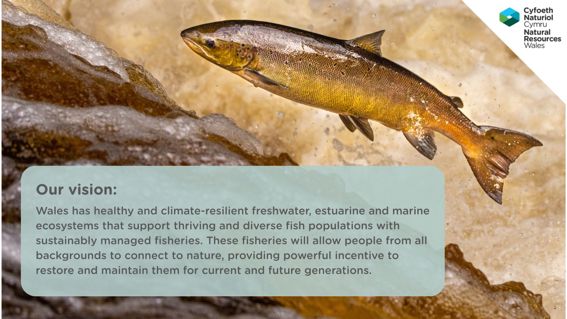
Freshwater and migratory fisheries in Wales play a crucial role in sustaining vibrant ecosystems, enriching cultural traditions, and supporting local economies. Iconic species such as salmon and sea trout, contribute to the biodiversity and the health of Welsh rivers.
Fisheries are deeply embedded in the cultural fabric of Wales, inspiring art, literature, and community identity while offering recreational opportunities that connect people with nature. Economically, they generate significant benefits through angling tourism, local businesses, and rural employment, making them a cornerstone of both environmental stewardship and socio-economic vitality.
Species at risk: Multiple challenges causing decline in salmon, sea trout and eels
Many Welsh fisheries are in decline. The sight of salmon leaping in Welsh rivers is an iconic image, but sadly today, their numbers have declined to an all-time low. Despite concerted conservation efforts and ‘catch and release’ being a requirement for all fisheries in Wales, all 23 principal salmon rivers in Wales are now below sustainable limits, and declining further.
In October 2024, we published our last salmon stock assessments, which recorded the lowest catches of both salmon (122 nets, 812 rods) and sea trout (260 nets, 3,510 rods) since consistent records began in 1970s.
And there is a similar story for Wales’s sea trout and eel populations, once thought to be more robust, but which are also now showing worrying levels of decline.
But is not all doom and gloom. Many still water and river fish populations seem to be thriving, and are supporting active recreational fisheries. Engagement in angling, especially for trout, grayling and coarse fish has increased since Covid.
Impacts of a changing climate
While there are many pressures affecting our fisheries – including pollution and habitat loss - climate change impacts and rising water temperatures are the greatest risk. Often regarded as an indicator of good environmental quality, salmon and sea trout need cool, clean water and healthy freshwater and marine habitats to thrive.
New strategy for climate-resilient fisheries
As we continue the fight to protect and restore our fisheries, we have developed a new strategy to focus our efforts, resource and investment through to 2031.
It features three strategic objectives where we think our work can have the most impact:
- Welsh Fisheries are resilient to climate change – We will increase our understanding of the impacts of climate change on our fisheries and support freshwater ecosystems to become more resilient. This includes acting on pollution, ensuring sufficient river flows during dry seasons, restoring riverside shading and removing barriers to migration. We will provide the tools and guidance to private fishery owners to support them in creating climate-resilient still water and river fisheries.
- Declining and vulnerable stocks are protected and where possible on the path to recovery – We will continue to monitor and report on the status of salmon, sea trout and eel stocks to support evidence-based decisions. We will continue to act on and try to prevent illegal fishing with our partners, and ensure that regulatory controls for commercial and recreational fisheries are reviewed, renewed and revised where required to protect stocks. We will work with others to put vulnerable stock on a pathway to recovery.
- More people are connected to nature through fishing – We will ensure that fishing provides an accessible opportunity for people to connect to nature and continues to provide cultural and economic benefits, particularly to rural communities. We will continue to promote fishing in Wales, using money generated by rod licence sales to improve access to good quality fisheries, especially where there are clear community wellbeing benefits.
The strategy also includes a number of cross-cutting objectives to guide NRW in our delivery of our fisheries duties. These include improving transparency of how rod licence money is spent, improving our communications with fisheries stakeholders and delivering more through others, where additional skills lie outside of the organisation.
Our commitment to delivering the strategy will be demonstrated in a five-year fisheries programme that will set out a series of SMART objectives for delivery between 2026 and 2031.
Building upon existing achievements in fisheries enhancements
The delivery of our new strategy comes on the back of years of dedication and commitment from our teams and projects within Natural Resources Wales to protect and improve vulnerable fisheries.
Our flagship Four Rivers for LIFE, LIFE Dee and Upper Wye Restoration projects have undertaken extensive river and habitat improvements in some of Wales most protected rivers in recent years.
Their efforts complement the our day-to-day regulatory and monitoring work to report on and improve Welsh waters.
Further details of the Climate Resilient Fisheries: a Strategy for the sustainable management of migratory and freshwater fishes and fisheries of Wales, 2026 – 2031 can be found on our web site.